Named Virtual Card: What It's For and How It Differs from an Anonymous One
#reviews
A named virtual card has no physical form, but at issuance it's tied to the holder's real name, which stays on file with the bank or service. It works like any other card — the only difference is that the cardholder name field isn't blank, it's filled in with an actual person's name, and that name can show up in the app or account dashboard.
In practice, the difference matters wherever a service checks that the name on the card matches the customer's name — hotel bookings and car rentals both work this way. Below, we'll look at how a named card behaves at checkout, how it differs from an anonymous one, and how to choose between the two.
How a named virtual card works
A named virtual card processes a payment by the same rules as any regular bank card — you enter the number, expiration date, and the code on the back at checkout, and the service sends a request for confirmation to the payment system and the bank.
With a physical card, the name affects how fast it can be made — embossing personal details needs a separate factory cycle, so a named plastic card always takes longer to produce than an anonymous one. A virtual card has none of that limitation, since there's nothing to print. Named and anonymous versions are issued equally fast, and the real difference shifts away from issuance speed toward what cardholder data actually gets recorded at sign-up.
For example, when paying for a hotel booking, the site's form asks not just for the card number and expiration date, but also the cardholder's name in Latin letters. If that name doesn't match the one on the booking, the payment sometimes gets declined at the check, even with enough money on the card. With an anonymous card, there's nothing real to put in that field besides a random string of characters, while a named card gives the service the actual name, matching the rest of the booking details, and the question never comes up.
Named vs. anonymous virtual cards: what's the difference
The main difference isn't in the card itself, but in how it's tied to a person at issuance. A named card is registered against the holder's verified details, and their name stays attached to the card inside the bank's or service's system.
An anonymous or unnamed card is issued with no visible name, though the issuer still knows exactly who it belongs to — no name on the card doesn't mean anonymity toward the bank. It just means that a third-party site at checkout doesn't see the holder's actual name, or sees a generic placeholder instead.
| Parameter | Named card | Anonymous / unnamed card | |
|---|---|---|---|
| Cardholder name | Named cardListed and verified at issuance | Anonymous / unnamed cardNot shown to the service | |
| Plastic issuance speed | Named cardSlower | Anonymous / unnamed cardFaster | |
| Plastic validity period | Named cardUsually three to five years | Anonymous / unnamed cardOften one to two years | |
| Fits services that check names | Named cardYes | Anonymous / unnamed cardNot always |
Functionally, both cards work the same way — paying, transferring, and accepting top-ups — and the difference only shows up where a specific service cross-checks the name on the card against the name on another document. The name on the card by itself adds nothing to how fraud-resistant the transaction is — the difference is purely about identification data, not transaction security.
What a named virtual card is for
A named card matters for recurring, ongoing payments where the question of verifying identity eventually comes up — a subscription tied to a personal account for years, or a service that might need to process a refund and has to see the same name listed on the customer's other documents. For a one-off payment on a random site, that level of precision usually isn't needed, but the longer a card stays linked to the same service, the higher the odds of running into a form that asks for the holder's name after all.
The practical takeaway is simple: if a card is set up for one task over months or years, it's cheaper to get a named one from the start than to switch payment methods midway because of a single verification form. The same logic applies to customer support — if a payment ever needs to be disputed or refunded, support usually checks the payer's name against whatever's in the correspondence or account, and an anonymous card adds an extra step of explaining at that point that a named one simply doesn't require.
A named card often also comes with better service terms — a higher transaction limit or access to extra features — because the issuer has a clearer picture of who they're dealing with, and is more willing to offer those terms to a verified customer than to an anonymous instrument.
A named virtual card for international services
International services and subscriptions usually don't have a separate channel for crypto or a nameless card — they're built around a regular named card tied to a real person, and that creates different kinds of trouble for different users.
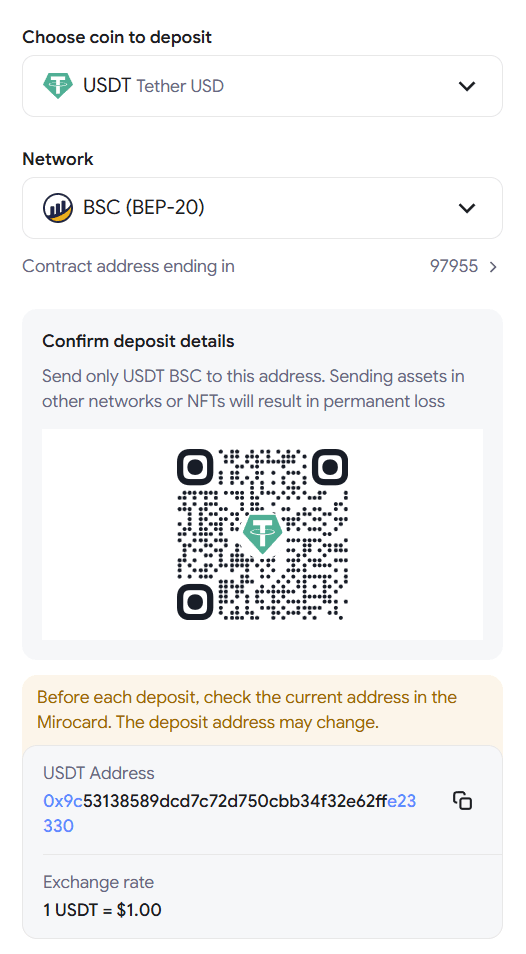
Crypto sitting on an exchange or in a wallet doesn't work directly with any of these services — it first needs to become money on a card the service is actually willing to accept. A named virtual card funded with cryptocurrency handles this without an exchange and without withdrawing funds to an intermediate bank account first.
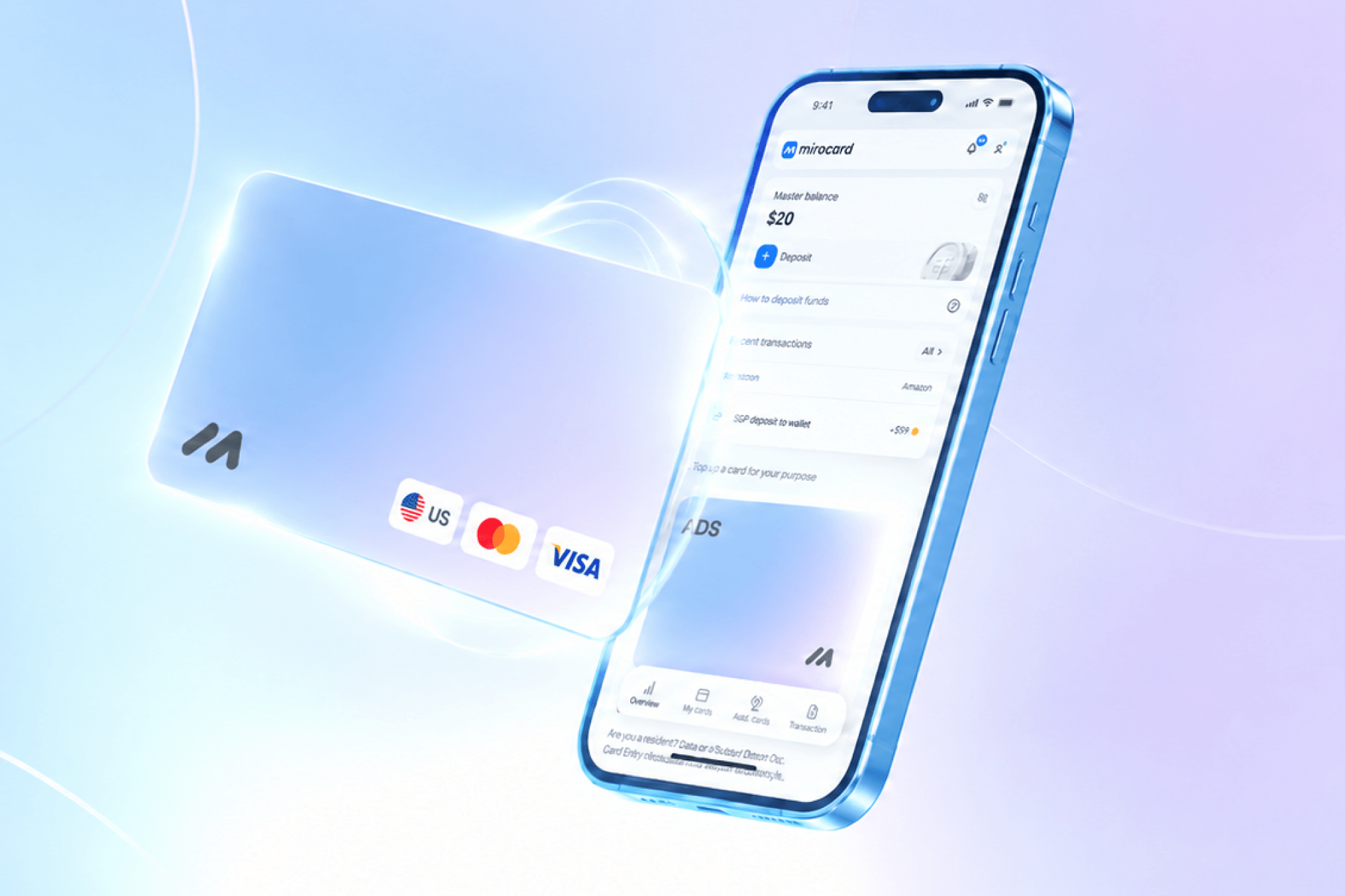
Mirocard issues virtual Visa and Mastercard cards — the whole setup happens online in your account, with no bank visit and no paperwork, and a card for paying subscriptions costs $5. The top-up fee shows right on the transfer screen before you confirm the operation, so the final amount is known upfront.
How to choose between a named and an anonymous virtual card
The choice comes down to one question — will the service you're about to work with require the name on the card to match the rest of your details? If yes, you need a named card, and that applies not just to banking operations, but also to a number of international services, insurance products, and platforms with mandatory identity verification. If the card is for a one-off purchase or a test payment where no one asks for the holder's name, an anonymous or unnamed card will handle it just as reliably.
The easiest way to check isn't through general reasoning, but by looking at the service itself — some sites state right in the payment section whether a named card is required, which lets you decide based on fact rather than a guess made in advance. If that information isn't available, it's smarter to just go with a named card from the start — switching to an anonymous one later to save a bit of time is far simpler than dealing with a declined payment halfway through checkout.
Conclusion
The difference between a named and an anonymous virtual card doesn't come down to technology — it comes down to one fact: does the service on the other end of the payment know exactly who it's dealing with? For most everyday purchases, that doesn't matter at all, but wherever a name does get asked for, a named card settles the question ahead of time instead of raising it in the middle of checkout.
Mirocard issues cards in this format, so users don't have to choose between issuance speed and compatibility with demanding services — both are already covered at setup. The real savings aren't so much in the payment itself as in the hassle avoided months later, if a payment gets declined over a name mismatch after the card is already in regular use.