How to Pay for Online Purchases and Services with Cryptocurrency
#Payment Instructions
Cryptocurrency has long ceased to be just an asset for storing and investing. More and more people want to spend it directly — on subscriptions, games, purchases, and services. But in practice that's not always straightforward. It's important to understand which tools make it possible to pay for purchases and services when you want to spend crypto assets or standard bank cards aren't available to you.
This article breaks down why payment difficulties arise, what options exist, and how to pay for international services directly from a crypto wallet without losing money on unnecessary conversions.
Why Payment Difficulties Arise
The core difficulty for cryptocurrency holders is simple — most services don't accept crypto. Streaming platforms, stores, AI tools, and gaming platforms all operate through bank cards and familiar payment systems. There's no way to link a crypto wallet to them directly.
As a result, even with funds in USDT, BTC, or Ethereum, paying for a purchase directly usually isn't possible. You'd first need to sell the crypto on an exchange, withdraw fiat to a bank account, and only then pay by card. It's a long chain, and at every step a portion of the funds goes to fees for conversion, withdrawal, and account maintenance.
What Online Payments Users Make Most Often
Online payments span many categories, each with its own specifics. But nearly everywhere the same rule applies — crypto won't work, a card from an international payment system is required.
Gaming platforms. Steam, Epic Games Store, PlayStation Store, Xbox — buying games, in-game currency, and subscriptions. Gaming services often apply strict anti-fraud checks to payments.
AI tools. ChatGPT, Claude, Midjourney, and similar services have moved to paid models. An international card is required to use them, since they don't accept crypto directly.
Cloud solutions. Hosting, servers, data storage, work SaaS tools like Notion or Figma. For freelancers and businesses, these are a regular expense.
Educational platforms. Online courses, language apps, professional certifications. Many are only accessible when paying with an international card.
Online stores. Marketplaces and international online shops that accept card payments. Here the card sometimes comes with an additional requirement that the delivery region and billing address match.
Requirements for the payment method vary slightly by category. But in most cases, a card from an international payment system is exactly what's needed — paying directly with crypto won't work.
Available Payment Methods
There are several working options, and the right one depends on what funds you have available.
International Bank Cards
A Visa or Mastercard from a country that supports international transactions pays for most services without issues. It's the most direct method — the service accepts it like any standard bank card.
For cryptocurrency holders there's a limitation here. A regular card doesn't work with crypto, so crypto assets first need to be exchanged for fiat through an exchange and withdrawn to an account. Only after that can the card be used for payment. Each step takes time and a portion of the funds is lost to fees. On top of that, getting a physical international card isn't always straightforward — banks often require a personal visit and proof of address.
Payment Intermediaries
These are services that pay for a purchase or subscription on your behalf. You send them money in a convenient way, including crypto, and they process the payment from their own funds.
The convenience is that you can pay with almost anything. But the service charges a markup, usually 15 to 30%. Another downside is depending on the intermediary's honesty. If the service disappears after receiving the funds, getting them back is nearly impossible. When paying with cryptocurrency this is especially risky, since such transfers are irreversible.
Virtual Cards
A virtual card is a bank card without the plastic — with a card number, expiry date, and CVV. Services accept it on equal terms with physical cards.
The key difference from regular cards is that some virtual card services can be topped up directly with cryptocurrency. For crypto asset holders, this solves the main problem. Crypto goes onto the card, and from there a standard payment goes out. No exchanges or bank accounts needed, and the card is issued online in minutes.
Using Virtual Cards
Virtual cards have become one of the most convenient tools for paying for international services. The reason is that they handle several tasks at once that other methods can't manage.
First, they're issued entirely online. No need to go anywhere, open a bank account, or wait for plastic to be delivered. The card details are available immediately after issuance. Second, many of them can be topped up with cryptocurrency, which matters for those who hold funds in crypto. Third, one card can be used to pay across many platforms — from streaming services to gaming stores.
Virtual cards are also convenient for expense tracking. A separate card can be set up for subscriptions, another for one-time purchases, giving clear visibility into spending in each direction. If card details are ever compromised, blocking one card is far simpler than reissuing a primary account.
When choosing a virtual card service, a few things are worth paying attention to — fee transparency, issuance and top-up speed, compatibility with the platforms you need, and the availability of support. These factors determine how smoothly payments go through.
Paying for Services via Mirocard
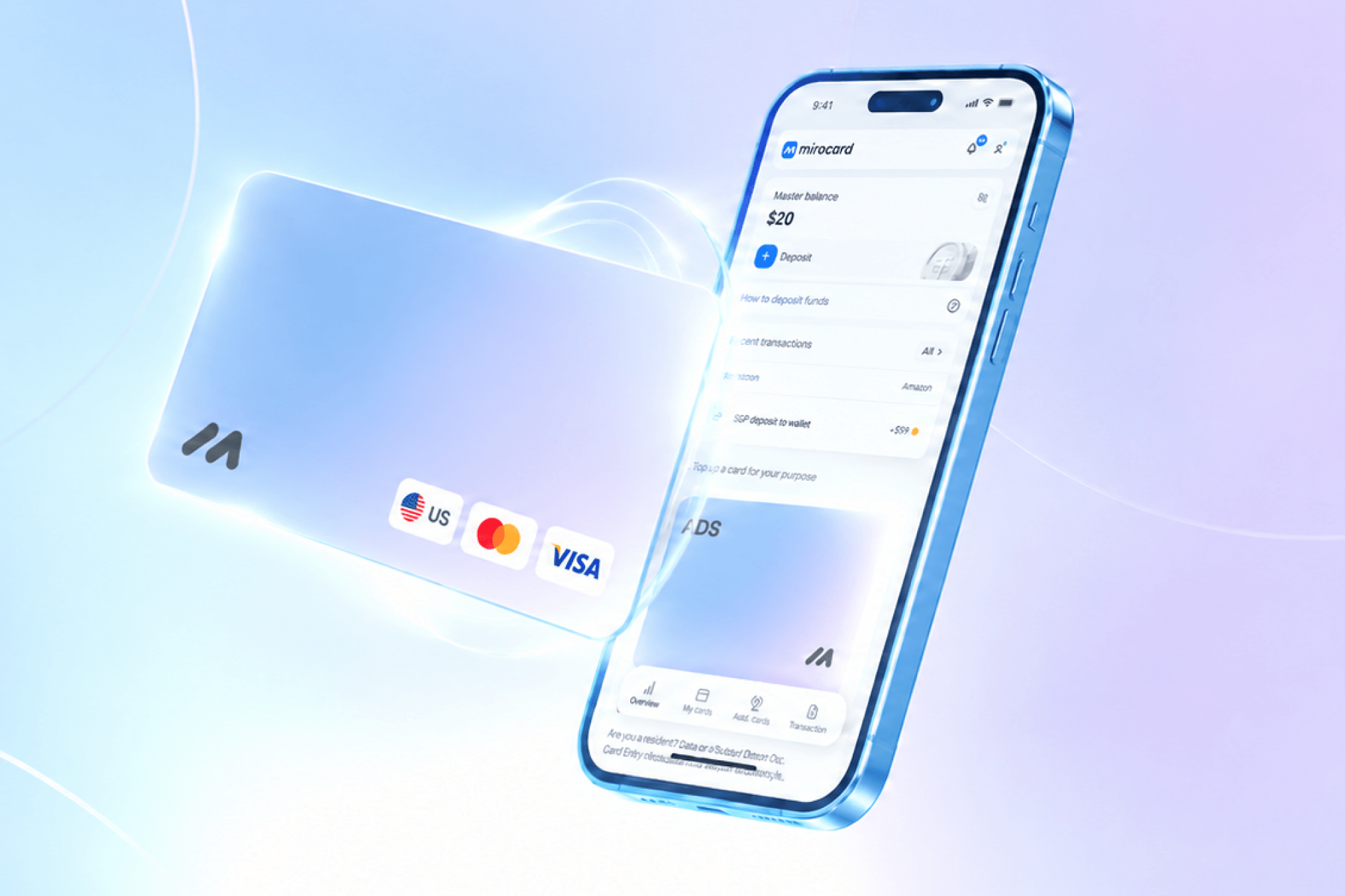
For paying international services, many users turn to specialized solutions like Mirocard. The service issues virtual Visa and Mastercard cards that are topped up with cryptocurrency and accepted by most online platforms as standard international cards.
Mirocard offers several card types for different purposes. The subscription card is suited for streaming services, AI tools, and other recurring charges. The advertising card is designed for use with ad accounts and supports 3D Secure. Cards differ in issuance cost and fee, so you can choose based on your specific goal. For example, the subscription card costs $10 to issue with a 4% top-up fee.
The card is topped up with cryptocurrency — ETH, USDC, USDT, AVAX, BCH, DAI, BNB, BTC, DASH, DOGE, POL, LTC, SOL, TON, TRX, and XMR are supported. A transfer from an exchange or wallet takes a few minutes, and funds are immediately available for payment.
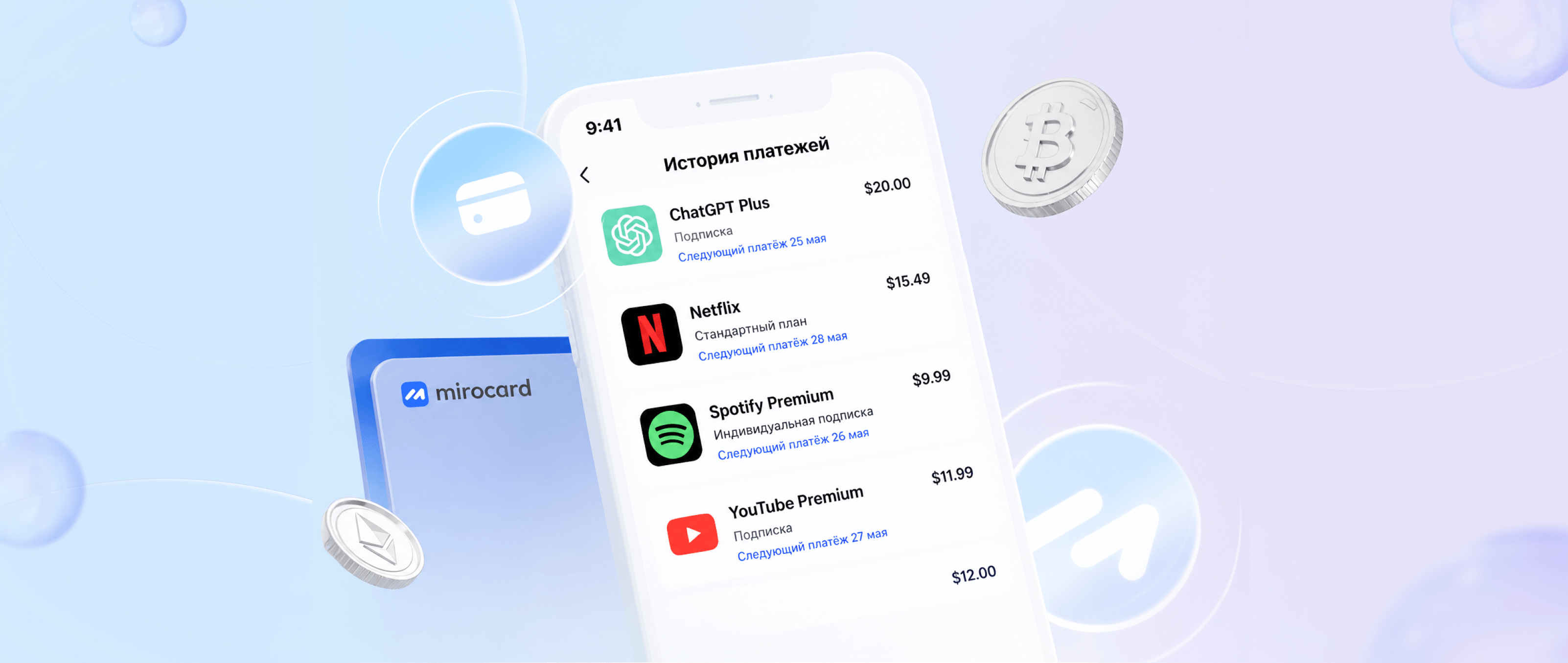
One card can pay for dozens of services at once — Netflix, Spotify, ChatGPT, Steam, cloud platforms, and more. All charges go from a single instrument, directly from the crypto wallet, without cashing out to fiat through exchanges.
How to Get a Mirocard
The process is fully online and usually takes less than half an hour.
Step 1. Registration
Open the Mirocard website and click «Get Card».
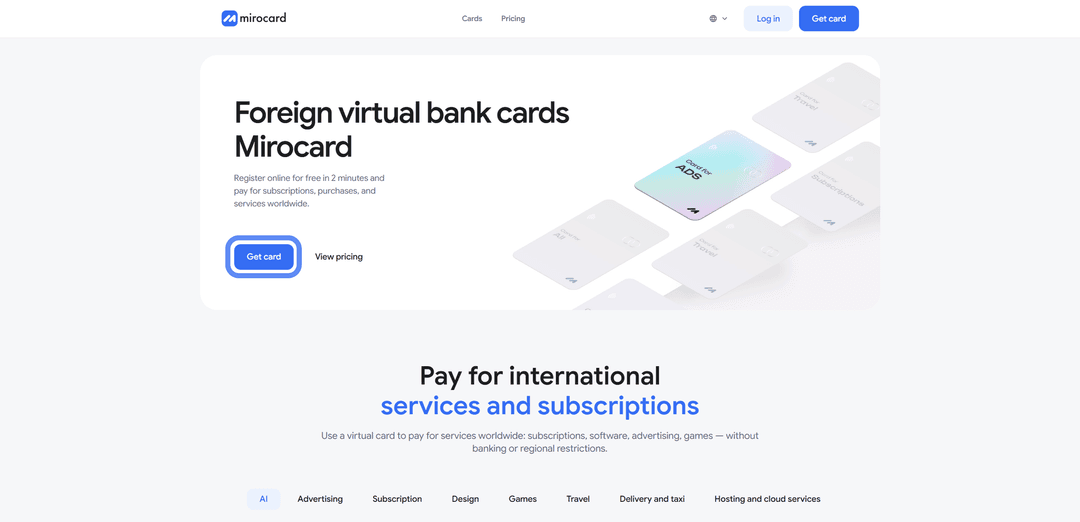
First time on the platform — select «Sign Up». You'll need a working email and password, and a confirmation link will be sent to your inbox.
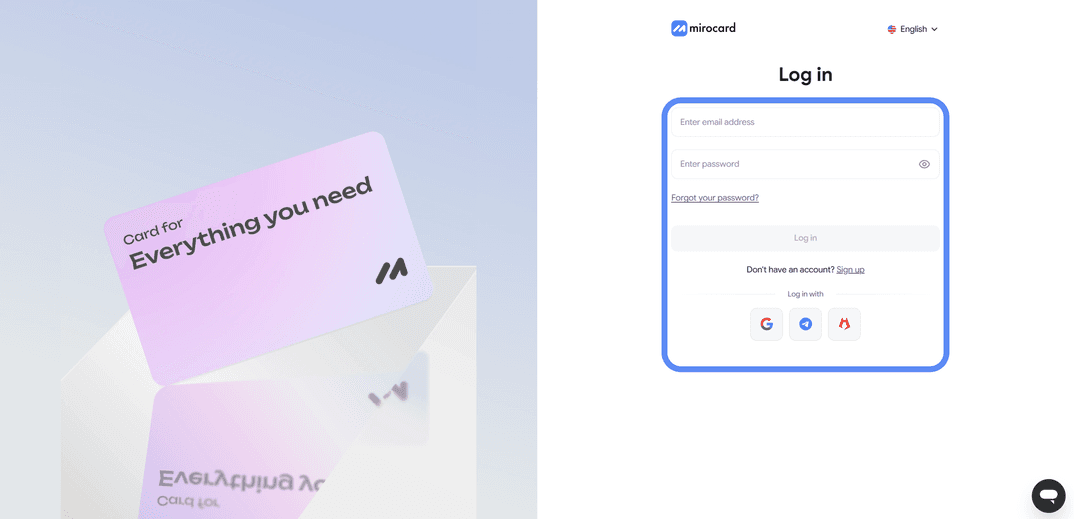
If you have a Heleket account, sign in through it and all your funds and cards will transfer to Mirocard automatically.
Step 2. Top Up Your Master Balance
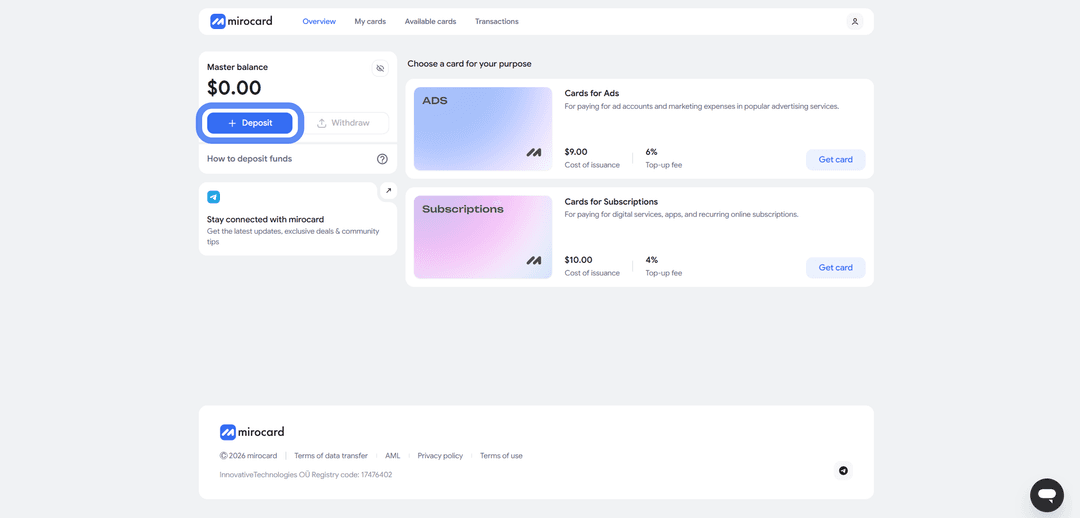
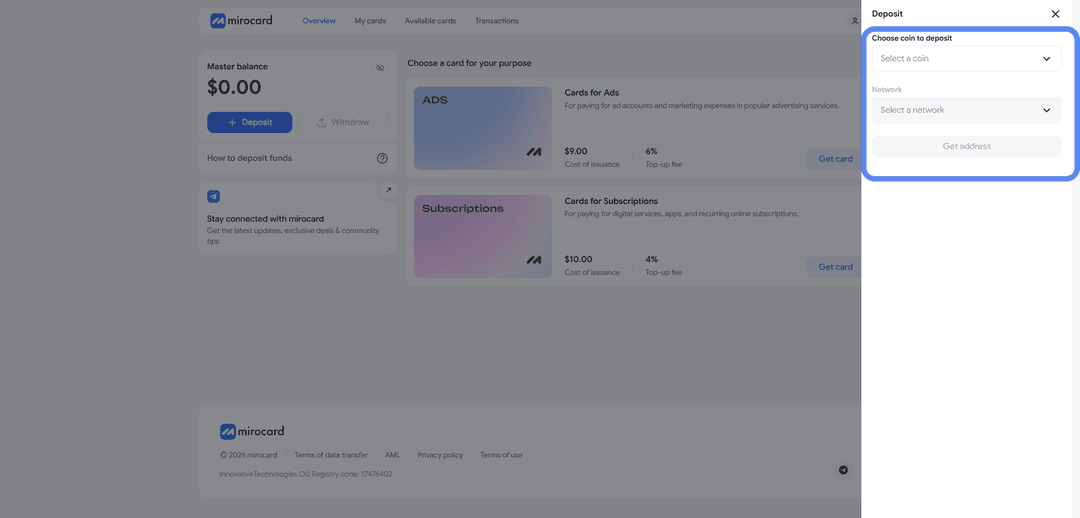
The lowest transfer fee option is USDT on the TRC-20 network. The service will provide a wallet address — send crypto to it from an exchange or external wallet. The balance will be credited after the transaction is confirmed on the blockchain.
Step 3. Select a Card
In the catalog, select the card type that fits your purpose and click «Get Card» on the right side of the block.
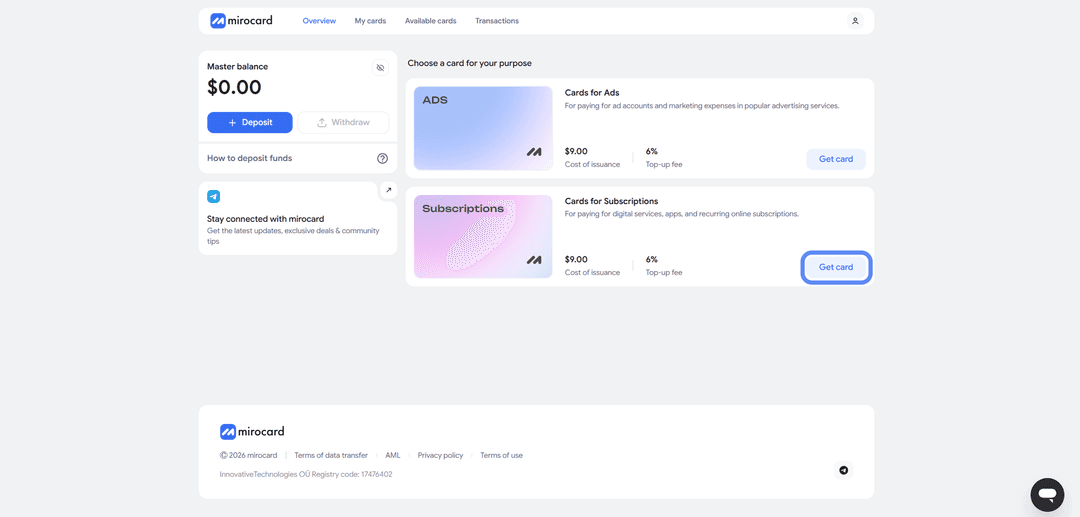
The issuance page will open.
Step 4. Verification
Before issuance, you'll need to upload documents for verification. This protects your balance — only you will be able to manage it and link new cards.
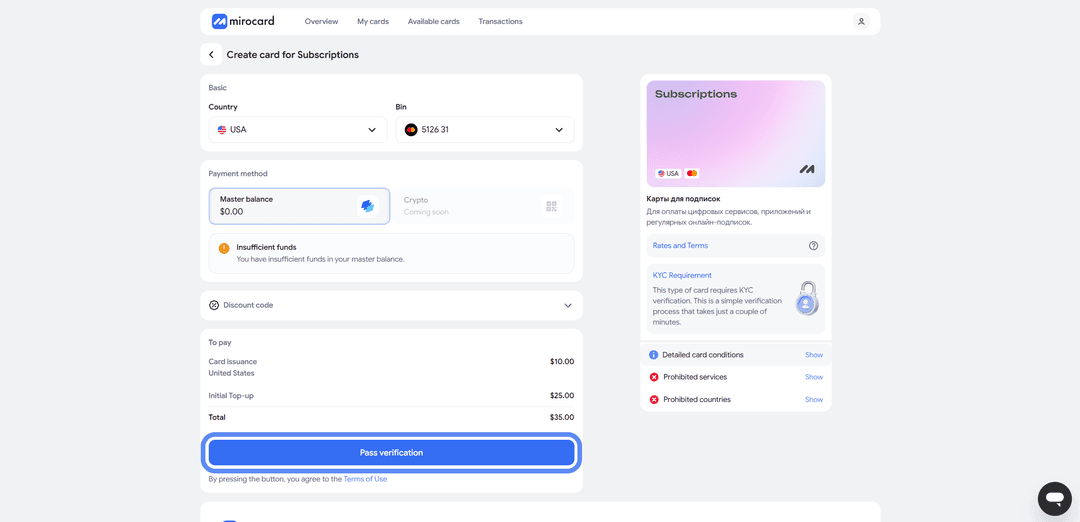
After verification, maximum top-up and spending limits become available.
Step 5. Pay for Issuance
On the issuance page, click «Deposit and Pay».
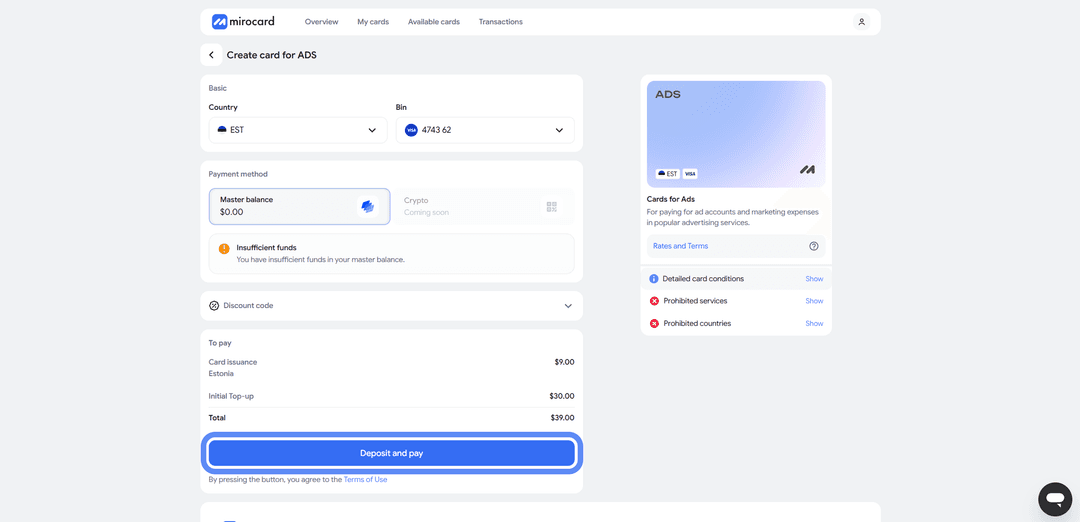
The issuance fee will be deducted from your Master Balance. The remaining amount will go to your card account and be ready for payment.
Step 6. Card Is Ready
The card will appear in your dashboard with its details and balance. No activation needed — it accepts payments immediately. The dashboard provides access to transaction history, top-ups, and the option to freeze the card if needed.
A tip — keep a small buffer on the card above the purchase amount. Many services temporarily reserve a slightly larger amount when processing a payment to verify the card. This is a pre-authorization hold, and the excess is returned within a few hours. But if the balance is exactly the payment amount, the check won't pass and the payment will be declined. A small buffer eliminates this issue.
Conclusion
Paying with cryptocurrency for online purchases and services directly is still not possible almost anywhere — most platforms only accept bank cards. But that doesn't mean crypto assets can't be used. The issue is solved by choosing the right payment instrument.
International bank cards work, but paying with crypto through them requires lengthy conversions. Intermediaries charge markups and offer no guarantees. Virtual cards strike a balance in speed, cost, and crypto compatibility — especially those that can be topped up with cryptocurrency directly.
Mirocard in this role works like a regular Visa but is topped up with crypto. Set it up once and pay for dozens of services directly from your crypto wallet, without cashing out to fiat. For cryptocurrency holders, it's the shortest path from assets to purchase. And for those who can't access standard international cards, a virtual card remains a reliable way to pay for the services they need.